
How to Deal With Peer Pressure as a Christian Without Compromising Your Faith
Knowing how to deal with peer pressure as a Christian is something most people think is mainly a teenage problem, but the truth is that it follows you well into adulthood, and it just changes its clothes along the way.
At fifteen it looks like being pressured to join in with things you know you should avoid. At twenty-five it looks like colleagues who find your faith quietly amusing and a social culture that expects you to leave it at the door. Then, at thirty-five it looks like family members who think your values are extreme or a neighborhood where your lifestyle choices make you the odd one out.
The pressure is real at every stage. And the stakes are real too, because the cost of consistently caving to it is not just a bad decision here and there. It is the gradual erosion of a faith that was meant to define your entire life.
This article is going to be honest about what peer pressure actually is for a Christian, why it’s more difficult to withstand than most church teachings acknowledge, and what really works when you find yourself in the middle of peer pressure.
Why Peer Pressure Is Harder for Christians Than Anyone Talks About
When Christian culture talks about peer pressure, most of the discussion is directed at teenagers and based on examples that are clearly identifiable. Someone offers you a drink at a party. A challenge to perform a clearly improper action. The answer that generally comes to mind is simply No, Plan, Walk away.
It is good advice. It’s only missing parts. The peer pressure to which most Christians are exposed, and which is a real threat to their spiritual life, is not so apparent. It is subtle. It is relational. And it is based on the human need to belong.
The pressure you feel when your entire friend group operates by a different set of values is not primarily the pressure to do specific things. It is the feeling of being out of place all the time, of seeing other people sitting in relaxed comfort when you are holding on to convictions that are rubbing against your cheeks, of gradually questioning yourself, “Is it worth it to keep these convictions held if it means that I don’t fit in as much with the people around me?”
It takes the pressure to happen over time. This doesn’t typically happen in ways that you would see. One day you realize that you are further away from your previous position than you can recall and just notice that.
What the Bible Actually Says About Social Pressure
Most people don’t think about peer pressure when they think of the Bible, but they should, and they should think of it in the language that the Bible uses.
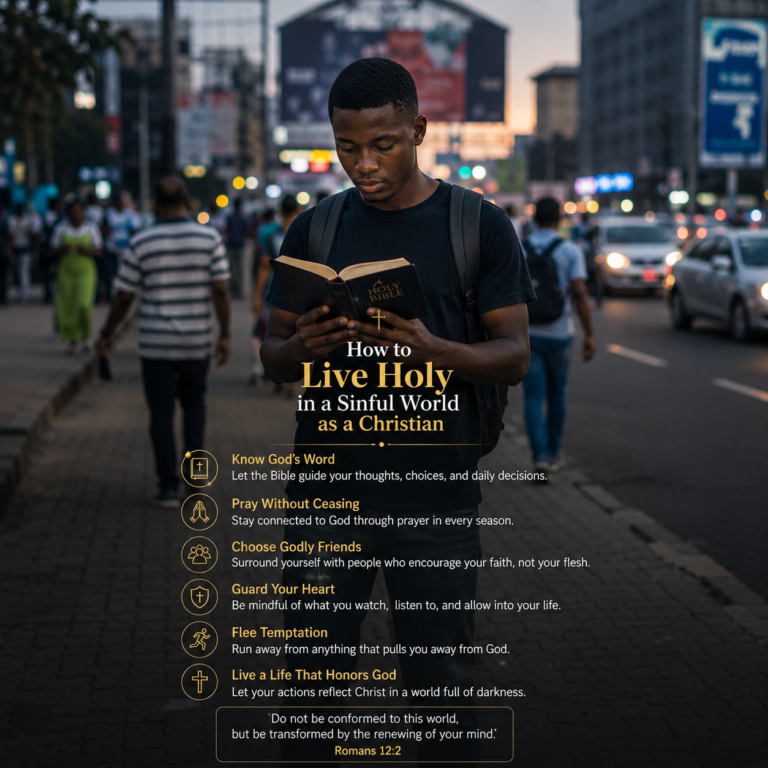
Romans 12:2 is one of the most relevant passages on this subject. It says do not conform to the pattern of this world but be transformed by the renewing of your mind. The word conform there is worth sitting with. It doesn’t refer to the use of force. It is describing the gentle, gradual process of being shaped by the world around you simply through sustained proximity.
Paul understood something that modern social science has since confirmed. The norms of people’s immediate social environments have a very strong influence on human beings. We pick up values, habits, words and priorities from those with whom we spend most of our time. That process is largely automatic, although it can be facilitated by the use of a computer. No one is to force our hand. It occurs with repeated exposure over a period of time.
This is precisely why the renewal Paul calls for is active rather than passive. Transformation is not what it is. Conformity is. Resisting conformity requires something deliberate and consistent.
How to Deal With Peer Pressure as a Christian in Practical Terms
There is real advice on how to respond to peer pressure as a Christian than just general thoughts of being strong. This is what really works.
Understand the reasons for your beliefs.
This is the foundation that most peer pressure conversations skip entirely, and it is the most important one. A Christian who has never seriously thought through his convictions is a Christian whose convictions are shaky when challenged.
The question you’re being challenged on is not the question of whether you can defend a theological position, but rather whether you can defend your faith or your values and live holy in a sinful world. It is about whether you’re a true believer or whether you’re a believer because your parents are believers. What is important is convictions that are yours, thoughts through and tested, convictions that you have decided upon yourself; convictions that are more lasting than those that you inherited from society.
This is a commitment of time on the part of the investor to learn about the faith. Knowing the rules, and knowing why. Not only knowing what you believe, but also why you believe it. This kind of rootedness isn’t so much about going to church every week. It’s from studying, it’s from asking questions, it’s from prayer that is a conversation and not a performance.
Build Friendships That Support Who You Are
One of the most useful and overlooked tactics to dealing with peer pressure is changing who you hang out with instead of trying to resist the people you are hanging out with.
When you have friends who don’t have the same values and who communicate a different lifestyle for you, you are swimming upstream with your willpower. A sustainable state for the short term and for a very long time.
It is not necessary to sever relationships with non-believers when forming real friendships with other Christians who are serious about their faith. It means having a group of people around you that are moving in a direction that is similar to yours and have the most consistent access to your thinking and habits.
Proverbs 13:20 says it simply. Walk with the wise and you will become wise. It is also true that the converse is true. The direction of your closest relationships shapes the direction of your life in ways that are both real and largely automatic.
Develop Honest Responses That Do Not Require a Sermon
There is something about peer pressure that makes it more difficult for Christians, and that is the idea that it demands a full spiritual explanation to respond. Someone offers you something that you don’t want. Saying no seems like you would have to articulate your whole theology and start a debate.
It does not. It is okay to have opinions and restrictions, without always having to explain them theologically. The message is clear and brief and polite: No thank you, this isn’t something that I do conveys firmness and respect without confrontation in every social interaction.
Reserve the deeper conversation for people who are genuinely curious and respectful enough to hear it. Not all pressure is malicious. Many people push simply because they are uncomfortable with difference and a calm, unjustified no actually communicates more confidence than a defensive explanation.
Recognize Pressure Before It Peaks
One of the best things a Christian can learn in this regard is to see peer pressure at its incipient stage and stop it in its tracks instead of waiting until it has escalated to full force to react.
Pressure typically doesn’t come in a single moment. It builds. It begins with minor adjustments, with making fun of something that is not funny, with going just a little bit further than you’d like to go to prevent awkwardness. Every little step is a natural next step and less important than the previous one.
To watch out for the beginning signs and make conscious decisions in them rather than when it is too late to pull back, is like putting out a small fire before it gets out of hand. The moment you are most likely to hold your ground is not when the pressure is at its maximum. It’s before the hype.
Frequently Asked Questions
Q1. Are there any reasons not to have friends who are not Christians?
It is not only okay, but good, to make friendships with people that don’t have the same faith as you. They help you learn more about the world and give you the opportunity to share what God has done in your life with them.
Q2. What do I do when peer pressure comes from within my church community?
Have a depth of faith and a real element of accountability in the community where you live; and be prepared to disagree with others, respectfully, when you are being pushed to a point that you don’t believe in the scripture, but traditions tell you to.
Q3. What should I do if nobody at work is like me because of my faith?
This type of pressure is sustained and occurs more during your time at work than in almost any other setting. Typically, the best way to do this is to remain true to yourself and not to “put on a show” or to compartmentalize your faith.
Q4. Is there ever a positive influence of peer pressure for a Christian?
Yes, and they should know this. A person who is serious about his faith, serious about maturing, who holds himself to an honest standard of character gives you positive social pressure that helps you grow and not hinders. This is one reason that the quality of your Christian community is so important. You will tend to go up or down to the level of those on whom you are influenced most in your life.
Q5. What if you have to choose between peer pressure and losing valuable friendships?
There are friendships that don’t last when a Christian becomes serious about his faith. It’s a sad setback. Typically what happens, however, is that friendships formed for the sake of compromising values are not friendships that are deep or honest enough to last a lifetime.
Q6. How do I discuss peer pressure with my kids from a faith perspective?
The most important thing is to normalize the conversation rather than making it a formal lecture. Children who hear about faith and its real world challenges in a positive and honest way, in a home environment, are far more likely to be able to handle pressure than children will be able to who only hear of it abstraact or in a theoretical sense. Tell about your personal experiences. Ask about theirs. Don’t talk to him, talk with him.
Conclusion
Knowing how to deal with peer pressure as a Christian is not a skill you develop once and never have to revisit. It is something you come back to at different stages of life, in different environments, facing different versions of the same fundamental challenge.
The underlying code is the same on each of those versions. Become familiar with whom God created you to be. Understand the rationale for beliefs. Connect with people who will support you. But when the pressure really starts to mount, know that it is growing, and take action out of a state of true choice, not accumulated drift.
Your faith was never meant to be a private, social-proof-dependent thing that only survives in environments where everyone agrees with it. It was supposed to be a living conviction, one that was bound to hold because it was based on something deeper than human acceptance.



It’s based on your faith .
And God listen to heart also , just know before you say it he has already known it
God knows everything and everything works with faith , believing that God will do help you or make it happen
Great 👌
this is lovely
Thanks for this quote is amazing its really encouraging to pray and makes you know the steps of how to pray