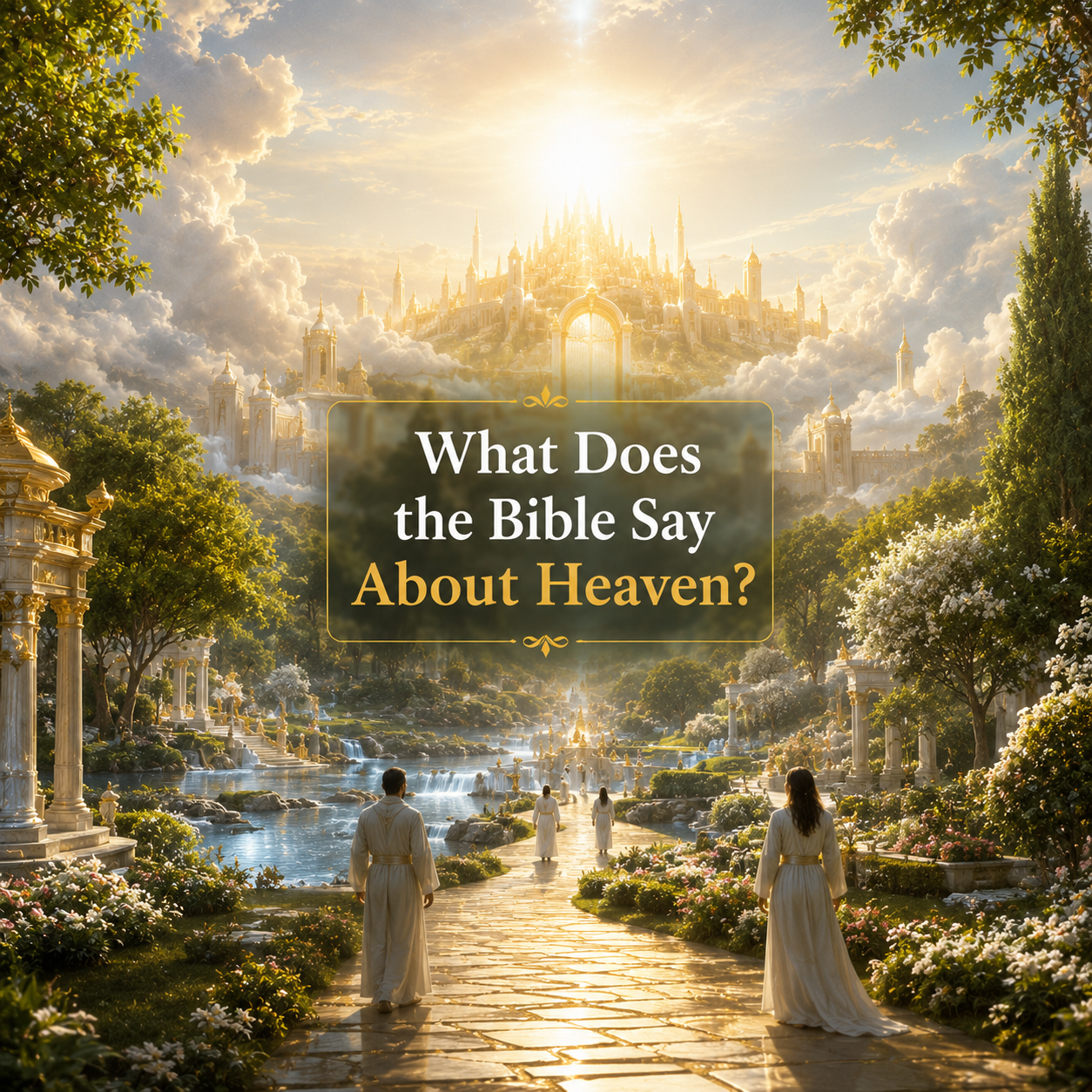
What Does the Bible Say About Heaven?
Understanding what the Bible says about heaven is one of the most personally significant things a Christian can explore, and yet most believers carry a picture of heaven that is drawn more from culture than from Scripture.
The popular image of heaven tends toward clouds, harps, and a kind of eternal Sunday afternoon that honestly does not sound that exciting to many people, including many sincere Christians who would never admit it out loud. When people imagine heaven as an endless worship service in an ethereal space with no particular connection to anything they have loved in this life, the comfort they are supposed to draw from the promise of heaven is often limited.
The biblical picture is significantly richer and more grounded than that. This article is going to explore what Scripture actually teaches about heaven in a way that may genuinely change how you think about it.
Heaven as the Dwelling Place of God
The most fundamental thing the Bible says about heaven is that it is where God dwells in the fullness of His presence and glory. What the Bible says about heaven begins with God rather than with what we will experience there, and that reframe matters enormously.
Throughout the Old Testament, heaven is consistently described as God’s throne room, the place from which He governs the universe and from which His presence most fully radiates. When Isaiah saw the vision of the heavenly throne room in Isaiah 6, the description is overwhelming. The seraphim covering their faces. The smoke filling the temple. The declaration that the whole earth is full of His glory. Heaven, in the biblical understanding, is not primarily a destination for human beings. It is the natural environment of God’s perfect presence, and it is remarkable that human beings are invited into it at all.
Jesus taught His disciples to pray thy kingdom come, thy will be done on earth as it is in heaven. That prayer assumes that heaven is the place where God’s will is already perfectly, completely done, and that the prayer is for earth to increasingly reflect that reality.
What Does the Bible Say About Heaven and the New Creation
One of the most important and least widely known dimensions of what the Bible says about heaven is the concept of the new creation described in Revelation 21 and 22.
Revelation 21:1-3 says and I saw a new heaven and a new earth, for the first heaven and the first earth had passed away. And I heard a loud voice from the throne saying, look, God’s dwelling place is now among the people, and he will dwell with them. That passage is striking because it does not describe redeemed people going up to heaven. It describes heaven coming down to earth. The final state of the redeemed is not a disembodied existence in a spiritual realm. It is a renewed, physical, embodied existence in a recreated world where God dwells directly with His people.
This is what the Bible says about heaven at its most hope-filled. The things you love most about this world, the beauty, the relationships, the creativity, the physicality of existence, are not left behind in the final state. They are redeemed and restored in a creation that no longer groans under the weight of sin and death.
That picture produces a genuinely different kind of hope than the cloud-and-harp version. It is hope for a world made right rather than hope for an escape from the world.
What the Bible Says About Who Will Be in Heaven
This dimension of what the Bible says about heaven is both the most important and the most carefully stated in Scripture.
John 14:6 records Jesus saying I am the way, the truth, and the life. No one comes to the Father except through me. That statement is exclusive and Jesus intended it to be. Access to the presence of God that heaven represents is through the person and the work of Christ, not through general virtue or religious effort.
Across denominations, Christians affirm this core truth even while they differ in how they understand the boundaries of who has genuinely received Christ and how that reception can occur. What is consistent is the recognition that heaven is not a default destination for everyone but a gift made available through genuine relationship with the One who made the way into it possible.
Frequently Asked Questions
Q1. Will we recognize our loved ones in heaven?
Scripture suggests yes. The disciples recognized Moses and Elijah at the Transfiguration even though they had never met them physically in this life.
Q2. Will there be physical bodies in heaven?
Yes, according to the biblical teaching on resurrection. The resurrection of Christ in a physical, tangible, recognizable body is the template for what the resurrection of believers will look like.
Q3. Is there a difference between heaven now and heaven after the resurrection?
Yes, and this distinction matters. The intermediate state, where the spirits of believers who have died currently dwell in God’s presence, is different from the final state described in Revelation 21-22.
Q4. Will we be bored in heaven?
The biblical picture strongly suggests not. Revelation describes worship, ruling, creating, and participating in a renewed creation. eternity described in Scripture is not passive existence but active participation in a world that is finally working the way God always intended.
Q5. Do children who die go to heaven?
Scripture does not address this with explicit specificity, but the character of God revealed throughout the Bible, His particular tenderness toward those who are vulnerable and unable to respond for themselves, has led most Christian traditions to affirm that children who die before the age of accountability are received into God’s presence.
Q6. Can we pray to people who are already in heaven?
This is a point of significant difference between Christian traditions. Catholic and Orthodox traditions practice the intercession of the saints, understanding the saints in heaven to be actively present and able to pray on behalf of those still on earth.
Conclusion
Understanding what the Bible says about heaven in the fullness of its biblical depth produces hope that is more grounded, more physical, and more connected to real life than the popular version.
The biblical picture of heaven is not an escape from what God made but the full restoration of it. That is worth living toward and worth sharing.





May God guide us to the right path
Thank you for the words and sciptures
remain bless
that is why it is good
Wow
Very enlightened
God is good.
Heaven or earth is the final destination of every human existence.
Be guided to make heaven.