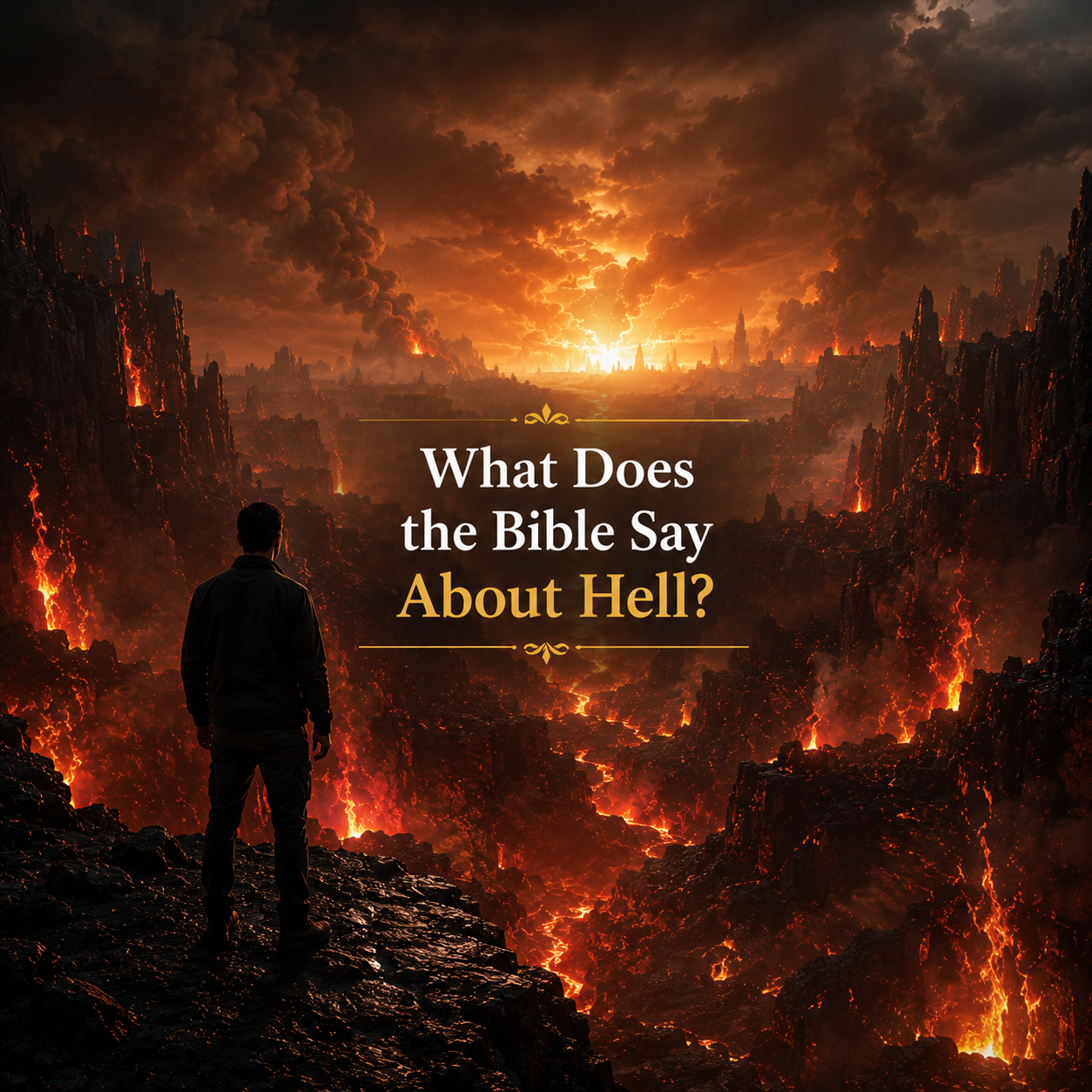
What Does the Bible Say About Hell?
Understanding what the Bible says about hell is one of the most avoided conversations in the modern church, and that avoidance has left many sincere Christians without a coherent understanding of something that Jesus spoke about more than almost any other topic in His ministry.
The silence from pulpits on this subject is understandable. Hell is not a comfortable topic. It makes people uneasy, it raises hard questions about the nature of a loving God, and it carries the risk of being used in ways that damage rather than serve the people who hear it. But the answer to misuse is not avoidance. It is honest, careful, compassionate engagement with what Scripture actually teaches.
This article is going to be honest about what the Bible says, respectful about the theological debates that exist around it, and grounded in the understanding that this topic ultimately serves the goal of genuine love for people rather than fear manipulation.
What Jesus Said About Hell
The most striking thing about what the Bible says about hell is how often Jesus was the one saying it.
Jesus spoke about hell more than He spoke about heaven. He described it as a place of outer darkness, a place of weeping and gnashing of teeth, an unquenchable fire, and a state of eternal separation from God. He spoke about it not to threaten people but to warn them, with the same urgency with which you would warn someone standing near a cliff about the danger ahead.
Matthew 25:46 records Jesus saying that those on the left will go away to eternal punishment, but the righteous to eternal life. The parallel construction in that verse is significant. The same word eternal describes both outcomes. If eternal life is genuinely eternal, then by the same logic eternal punishment is genuinely eternal. The text does not allow an easy revision of what that means.
This is the part of what the Bible says about hell that makes most people most uncomfortable. And it is worth sitting with that discomfort honestly rather than resolving it through selective reading.
What Does the Bible Say About Hell Beyond the Gospels
The biblical picture of hell beyond the Gospels includes imagery from Revelation and the epistles that fills out what Jesus described.
Revelation 20:14-15 describes the lake of fire as the second death, the final state of those whose names are not found in the book of life. The imagery throughout Revelation is highly symbolic but points consistently toward a final separation from God that is both real and permanent.
Paul describes the outcome for those who do not know God and who do not obey the gospel of the Lord Jesus as eternal destruction and exclusion from the presence of the Lord and from the glory of his might in 2 Thessalonians 1:9. That phrase, exclusion from the presence of the Lord, is significant because it frames hell not primarily as a place of physical torment but as a state of final, willing separation from the God who is the source of all goodness and life.
The Theological Debates Christians Should Know About
Here is something that most church teaching on this subject leaves out. There are genuine, serious theological debates among committed Bible-believing Christians about the nature of hell that are worth knowing about.
Three main positions exist within the broader Christian tradition on what the Bible says about hell. The traditional view holds that hell is a state of conscious, eternal punishment and separation from God. The annihilationist or conditional immortality view holds that the unsaved are ultimately destroyed rather than consciously suffering forever, with the fire language in Scripture describing consumption rather than ongoing torment. The universalist view, held by a minority within Protestant Christianity and more widely in some other traditions, holds that God’s love will ultimately redeem all people.
These debates are genuine and they are conducted by serious scholars who all take Scripture seriously. Knowing they exist does not mean all positions are equally supported by the text. But it does mean that a confident, nuanced engagement with the topic is more honest and more helpful than pretending there are no questions worth asking.
What the Doctrine of Hell Means for How We Live
The doctrine of hell, honestly understood, is not a weapon to use against people. It is one of the most urgent motivations for genuine, compassionate evangelism and genuine, sacrificial love for the people around you.
If what the Bible says about hell is taken seriously, the natural response is not fear-driven religion but love-driven urgency about sharing the news of a God who has provided a way out of it through the life, death, and resurrection of Jesus Christ.
Jude 23 describes believers snatching others out of the fire. The language is striking. Not passive indifference, not aggressive condemnation, but the urgent, active love of people who understand what is at stake and who are motivated by that understanding to reach toward others with genuine care.
Frequently Asked Questions
Q1. Did Jesus actually believe in hell or was that added by His followers?
The historical and textual evidence is clear that Jesus Himself spoke about hell extensively in the Gospel accounts. The attempts to attribute hell to later followers rather than to Jesus Himself require treating the Gospels with a selective skepticism that is not consistently applied to other parts of the text.
Q2. Is it loving to believe in hell?
A doctor who does not tell a patient the truth about a serious diagnosis out of a desire to protect them from difficult feelings is not acting in genuine love. Genuine love tells the truth and trusts people with it.
Q3. Will there be degrees of punishment in hell?
Several New Testament passages suggest that judgment will be proportional to knowledge and accountability. Jesus spoke about it being more tolerable for Sodom than for cities that rejected Him after seeing His miracles.
Q4. What happens to people who never heard the gospel?
This is one of the most genuinely difficult questions in Christian theology and one that deserves more honesty than most church settings provide. Scripture affirms that God is just and that His judgments will be right.
Q5. Is the fire in hell literal or symbolic?
Scholars hold different positions on this. Those who read the fire language literally point to the consistency of the imagery across different New Testament writers.
Q6. Can people in hell repent and eventually reach heaven?
The consistent witness of the New Testament is that the decisions made in this life are the decisions that determine eternal outcomes.
Q7. How do I talk about hell without driving people away from faith?
By keeping it connected to the love that motivates its disclosure. The same God who warns about hell is the God who sent His Son to provide the way out of it.





very good
What Bible says about Hell
good
good and nice
Thank you.
This is good for the soul
God bless you
Thank you lord
Being connected to God is good
People can’t repent in hell
Interesting
Prayer is good in all lives
Guide my steps God
Hell is the part of destruction
Good will give everyone the strength for prayer 🙏
Have no comment yet
Hell is real and heaven is real