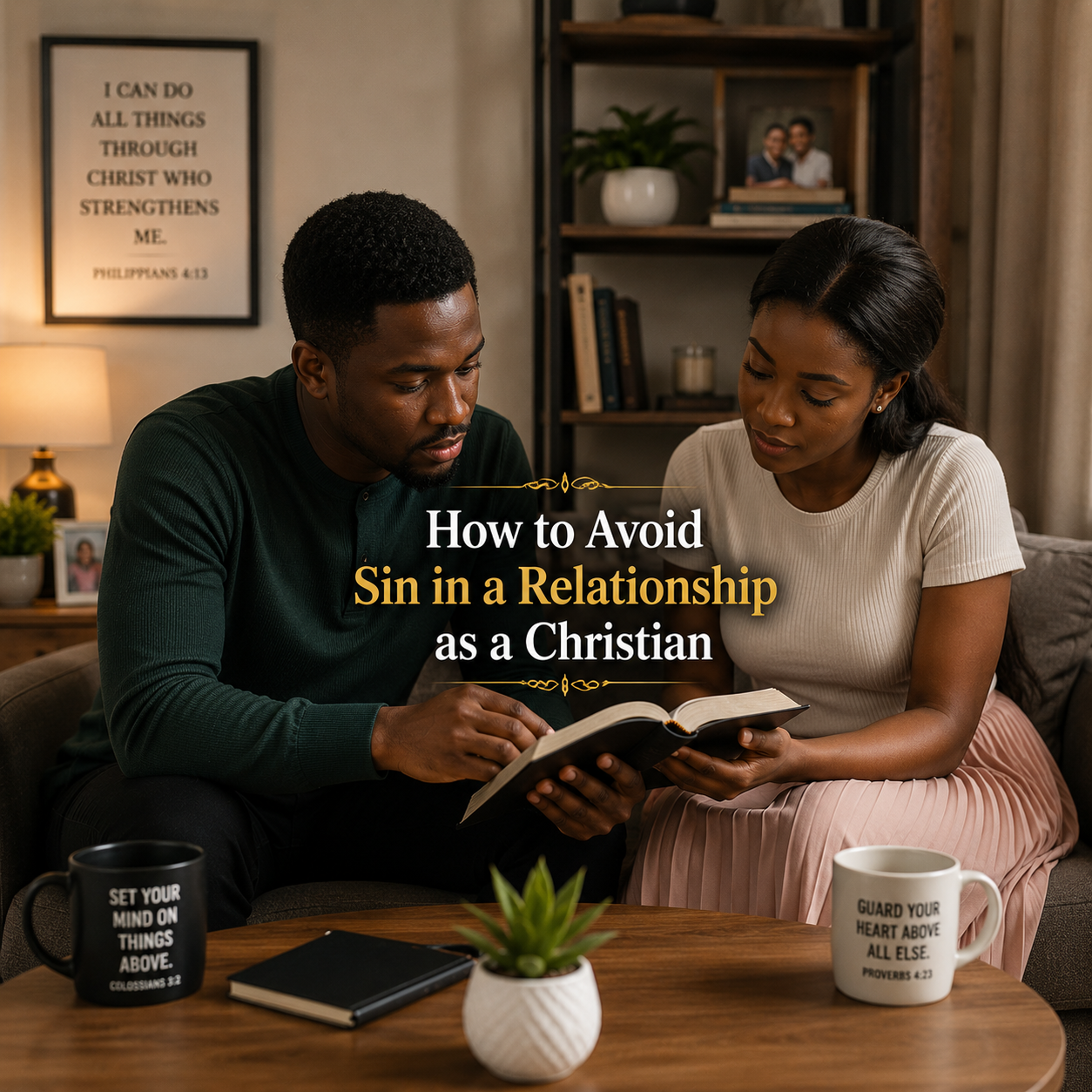
How to Avoid Sin in a Relationship as a Christian
One of the most practical spiritual questions that a Christian can ask is how to avoid sin in a relationship and the truth is that it isn’t a straightforward list of what not to do.
Sin in a relationship is not always obvious. It does not usually appear as a literal and clear line to cross in a clear identifiable moment. Most times, it comes over a long period, in small steps, things that don’t seem too much in one way, but when you look back on them one day, you find you’re far off course.
That gradual quality is exactly what makes this conversation worth having with honesty and without shame. Because you cannot address something you have not been taught to recognize, and most Christian teaching on this subject has stayed at the level of rules without going deep enough into the mechanics of how sin actually works in the context of a relationship you genuinely care about.
Why Sin in Relationships Works the Way It Does
Sin in a relationship has a specific dynamic that sets it apart from most other forms of spiritual struggle, and understanding that dynamic is the first genuinely useful step.
Romantic love generates a special type of attachment that reduces the effectiveness of the normal spiritual barriers. The person you’re connected to is someone who you’ve got an emotional attachment to. You want to make them happy. You want them to see you as the person you want them to be with. That’s all natural and not necessarily a problem.
But it does mean that the pressure to compromise in a relationship is different in kind from the pressure to compromise in other areas of life. It is relational rather than abstract. It comes from someone you love rather than from a faceless temptation. And that makes it considerably harder to address with the standard frameworks most Christians were given.
Recognizing this is not an excuse. It is a more accurate map. And a more accurate map is what you need to actually navigate avoiding sin in a relationship rather than just knowing in theory that it is important.
The Specific Sins That Tend to Enter Christian Relationships
When Christians talk about sin in relationships, the conversation almost always defaults to physical intimacy. And that dimension matters. But it is only one part of a larger picture that rarely gets the same attention.
Dishonesty and Selective Truth-Telling
One of the most common sins in Christian relationships is a form of dishonesty that does not feel like lying. It is the strategic presentation of yourself that shows what you want the other person to see and conceals what you are afraid will cost you the relationship. It is managing their perception of you rather than letting them know you genuinely.
This matters spiritually because a relationship built on a managed version of yourself is a relationship built on something that is not real. And when the real version eventually becomes visible, the gap between who you presented yourself as and who you actually are becomes a source of damage that honest disclosure at the start would have prevented.
Idolatry
The word sounds heavy but the reality is subtle. When a relationship becomes the primary source of your identity, your security, your emotional wellbeing, and your sense of purpose, it has taken a position in your life that belongs to God. That is the practical definition of idolatry in a relational context.
The telltale signs are a spiritual life that consistently shrinks when the relationship is going well, an inability to function emotionally when the relationship is under pressure, and a willingness to compromise values that felt non-negotiable before the relationship because the relationship now matters more than the values do.
Spiritual Neglect
A relationship between two Christians that consistently crowds out both people’s individual relationship with God is a relationship producing spiritual harm regardless of what else it is doing well. When time with God is sacrificed for time with the relationship, when prayer becomes something you do when you are apart rather than a genuine part of how you relate together, when church attendance and spiritual community become secondary to the couple’s own social world, something has gone wrong that needs honest attention.
How to Avoid Sin in a Relationship Through Genuine Structure
The most effective approach to avoiding sin in a relationship is not to try harder in the moment of temptation. It is to build structure into the relationship that makes the right choices the path of least resistance rather than the path of maximum effort.
It’s about creating relationship structure so that the choices that are right are not the ones that require a lot of effort, but rather the ones that require little effort.
This is a process of agreeing on certain behaviors and situations to avoid before they come in contact with the relationship, not during the contact. It involves being accountable to others, outside the relationship, who are given permission to ask honest questions. It’s about creating a relationship culture where both individuals feel safe confronting things that aren’t working out in the relationship rather than avoiding conflict by simply putting on a happy face.
James 4:7 says submit yourselves therefore to God, resist the devil and he will flee from you.
That verse connects submission to God directly to the capacity to resist. The order matters. The resistance that holds in difficult moments is almost always downstream of a genuine daily submission to God that has been built into the structure of your life and your relationship.
A relationship where both people are genuinely submitted to God individually brings those two submitted spirits into contact with each other. That creates a different relational environment, one where avoiding sin in a relationship is a shared value and a shared practice rather than one person’s lonely effort to hold a standard the other person does not share
The Role of Confession and Grace When You Get It Wrong
Silence will be one of the most destructive cycles in Christian relationships following a failure on sin. Two people cross a line they committed not to cross. Neither knows how to bring it up without triggering shame, conflict, or a reassessment of the whole relationship. Thus, it remains unchecked. The unspoken failure is a silent go-ahead to the next failure.
Failure is not a reason for silence in the Bible. It’s being truthful with yourself, remorse and your own decision to change your actions for the better. 1 John 1:9 says if we confess our sins, God is faithful and just to forgive us our sins and to cleanse us from all unrighteousness. That guarantee applies to failure in relationships just as much as it applies to failure in any other aspect.
It is not being weak when you face what happened, tell the truth to God, tell the truth to each other, and commit again together to a new path. It is relational integrity that is centered in honesty and grace that creates something that is truly worthwhile.
Frequently Asked Questions
Q1. Can one have strong feelings for someone in a relationship without it being a sin?
NO. There are strong feelings involved, including a physical attraction and a strong emotional bond that God designed as part of an approach toward the type of commitment marriage is. Emotions are NOT sins.
Q2. If I feel that I am sinning in my relationship, but do not wish to end it, what is my next step?
But the solution isn’t to break up with the partner, it’s to be honest. Bring it to God in a sincere manner. Share it with at least one trusted person who is not involved in the relationship who can accompany you. If it is a safe and appropriate relationship, share it with your partner.
Q3. Is sexual sin in a relationship “forgivable”?
Yes, completely. This is where God’s grace is as full as in any other. What the Bible always links to failure of any sort is a genuine repentance, an honest confession, and a conscious choice to create new patterns in the future.
Q4. How can I tell whether my relationship is leading me into sin or toward it?
A genuinely useful diagnostic is to ask honestly whether your relationship is moving you closer to God or further from Him over time. Is your prayer life growing or shrinking since this relationship started? Are you more honest with God or less? Are you making choices you would have been uncomfortable with before this relationship began?
Q5. Should I break up with someone because of one sinful incident?
Not necessarily. The question is, is the incident truly isolated and is both parties truly sorry for it, or is it a pattern that neither or both are willing or able to correct?
Conclusion
Avoiding sin in a relationship as a Christian isn’t about playing a game of spiritually impressing others. It’s about establishing a relationship grounded in honesty on which both parties can stand without secrets, without accumulating compromises, without any kind of subtle harm that occurs when there is an imbalance between your image and the way you live your life.
The rules for avoiding sin in a relationship are not meant to limit the relationship. They are willing to look after it. A relationship that is really shielded by accurate and graceful decisions is one that has the greatest possibility of lasting.
That’s a goal to work towards. And it is accessible for all couples who are ready to be sincere on what it takes.


Rules need to set and adhered to in relationship to avoid sin
This so interesting
It’s very nice, reading this
Great 👍
Loyalty
Respect
Submissive
Truth
Loyalty and honesty
Good moral lesson
Nice 1
A very nice write up I really enjoyed it
I really love reading this 😊😊
How can I be more closer to God?
And what are the tips to a healthy relationship
Thank you
God please help us
Great work
I love the write-up.
It’s all about devotion to God first so that He can guide us in our relationships
I love this
Nice information
Its true sin in a relationship is the vital destruction
Well done
Avoiding sin in a relationship are not meant to limit the relationship
May God help us to avoid sin in our relationship, Amen.
We can avoid sin in a relationship by practicing the husband’s religion
Yh this is really helpful because many relationships take part in the sin lust
This is a good Job which can be recommended to someone
I love the write up the writer should keep it up
Nice
ewurunvictor@gmail.com
Really encouraging
Wow am Encouraged
Very interesting and emotional
I want more
Interested
All the write ups here are truth
Good news
Very inspiring. Thank you
Very interesting and encouragement
Wow so impactful..
Great work
Very encouraging mostly for the growing youth
So encouraging
Very delightful
Encouraging
Very educative
So impactful
Nice
Great write up
Inspiring✨
Educative
Good
Good moral
Truly
Encouraging
How can I know more about God
Very good
Exploring
Educated
Awesome.
Perfect.
Impressive
Sin is actually not good
So we should keep on watching our life on daily basis
Very educative
Very good
Thank you Jesus 🙏🏿🙏🏿
Thank you Lord
Thank you Lord 🙏 for a day like this 🙏🙏
Very nice
Wow I’m encouraged
Lovely
Encourage
Wow
Ondo
Ondo state
Nice one
So impactful
I really appreciate for this opportunity that you gave me
Hey guys how are you doing today
Wow
This is a great word
May God help us to do the right thing, very good write up
I love it
Thank you so much,
Thanks
A lot
Be honest
Bring yourself to God and he will forgive your sins
It really nice
Nice 👍 thanks
I love reading this
I love the write ups
Fhioi. King moo fc
Good
Thank you lord
This is great
Wow this is good
i love being a Christian
This is a good guide for christians.
It very nice
Good message
Very insightful 👌
I love it
Absolutely
Love this
We need to avoid some intimacy that will lead us into sinning in Relationships
Very inspiring thank you
Bilivas?
Nice one, up you
I love this, post more 😌
So very much impacting 🥹
Thanks for that 😌
May God forgive us our sin
Beautiful
Wats to avoid sin in relationship
A good lesson indeed
Very inspiring
Hi
I would love to be closer to God
I am glad I read this today
I highly appreciate this app
I really appreciate you this opportunity
This blog post is very interesting,it shows what being close with God is and how to break every barrier of sin 😁😁😁
Huh
Very educative
Very good
Very encouraging and interesting
🙏🙏🙏
😁😄jey
Okay
Thank you Jesus 🙏🙏for this great opportunity
Thank you lord
This is helpful at this time
Very educative
I love it
I will lik
When a relationship takes your purpose and the place of God in your life, it simply means you idolizes the relationship
Hnmmmm….. This life Sha may God help us
I love this, I really appreciate it
Great work keep it up
Thank you Lord
It looks so good and helpful
Nice write up and educative
Very helpful
When you are truly in love with someone you don’t need to hide it is emotional feeling of communication you express your feelings to the person whether you have money or you don’t have money that does not matter what matter is that you express your feelings for someone that you love what you love someone you Will care for the person when you lost someone you would take me for the person where you love someone you Will never let Go when you love someone you will you we treat the Person the way you want him or she to treat you
A very interesting guidelines
It will boost my faith and my worship to God
Thanks a lot
It’s really good to know how to prayer
Thank you very much for this
Fear of God necessary in relationships
So encouraging
Very educative
I really enjoy this write up
I love the teaching
Thanks 🙏🏻 for throwing more light to the topics raised here.
I thank God for life
That’s great creating job opportunities for fellow individual. Making education not a waste
Awesome
Good one
It is great
Wow
This is really nice I enjoyed reading this
To be honest really pays
Nice 🤩
Encouraging
Very encouraging
Christians experience a lot of temptations but we’ll overcome
Christians experience a lot of temptations
I like it
aondohembatimve025@gmail.com
I really learn more,and I think with this,it will help me to redefine myself when it comes to refrain from sins ..
How can I get the job 😃
Like the write-up
And it teaches a lot
I love this write up
I’ve learn a lot here
Inspiring
Very educative
Very good
So interesting
So impressive
Hi, I am an Seo writer and I can put together contents like this to fill your site
2 wise ppl can’t make a relationship workout 🥲
Failure is not a reason for silence in the Bible. It’s being truthful with yourself, remorse and your own decision to change your actions for the better. 1 John 1:9 says if we confess our sins, God is faithful and just to forgive us our sins and to cleanse us from all unrighteousness. That guarantee applies to failure in relationships just as much as it applies to failure in any other aspect.
Very encouraging
I love this
Nice
Thanks for the opportunity
I love everything about this
It really helpfull
Because of love
It’s a very nice and educative article
I really enjoyed it 😊
Nice writeup
I’m encourage
Love it
Goodness
Goodness my love
Great thanks
Joy
It was nice reading this
Great
It’s nice reading this write-up
That is very good
This is so timely
Motivational!!
Very educative
Very educative and timely for those in search of truth…..
Really great
Very interesting 👍
Very interesting 😎
i read it and i learn more about it thank u
i hope u will give a greater speech next catch up
The lord is good
I appreciate the wite up
Nice write up
QI42K1CE
QI42K1CE
Aliyakubugmail@gmail.com
Seems good I love the app
Kudi tube ff k
Nice!! This is encouraging
I love this writeup
Thank you Jesus
Thanks for the encouragement
Wonderful teaching
What a great lesson
God please help me and take control 🙏
I pray we’ll be drawn closer to God
Thank you lord Jesus 🙏
Very educative
This is nice and beautiful I really appreciate this
Nice one
Thank u and really appreciate the advice
This is so so impantful
This is so inspiring and thoughtful
Jdjdnndbhhdj
Good to read but make it more self explanatory next time
Ok thank u
What a great message
Alhamdulillah
It’s indeed a privilege to read this
It is well
waooo I am blessed, what an encounter
I love reading this article
I love reading this
It’s even help my relationship
De write did a great job keep it on
I’m from Ondo State
I’m from akoko
I’m good and you can I have more information
What ever you soul you shall reap
Hod help me build a relationship with you
I want more
Wow very nice
May God help us
We value the best part
Thanks for your service
Learned a lots from this!
Good
I love reading this thanks
cool
Sinning us something we all have to avoid this will help all believers to to reduce or stop the way they sin it’s a privilege to read this
So powerful
I really enjoyed the platform
It’s indeed a privilege to ready this
I love it soooo encouraged
Nice
Wow this s awesome nice write-up I want to read more of this many more articles like this is highly welcome people need something that will bring them closer to God thank you and God bless you
interesting
Awesome
I love reading this, they are very interested
So thoughtful
It’s very interesting I wish to read another one tomorrow
It’s very interesting I wish to read more
Nice write up I wish to read more
It’s impactful
Ok is gud
God please have mercy 😭
Lovely and nice
Its true sin in a relationship is the vital destruction
I love reading this it educating
Its accurate
Yes because is a knowledge of a very similar situation
Yes it’s very true
Wow nice and interesting I love the write up
I really appreciate
It was inspirational
What can I say
This is very enlightening
Thanks for the teaching and explanation
Wow
This is so nice
Is encouraging
Encouraging
Nice
Ever since I start reading this I have learnt a lots
Thanks for the information
This is good and inspiring
This is wonderful to hear
This is great
to hear
This is so inspiring
This is good news
This is great
Good job
Amazing
I like the app
Wow
I’m encouraged
Thank you admin for this wonderful biblical message a lot to learn in it yes
Lovely
Thank you for this insightful reminder. A Christ-centered relationship is built through prayer, purity, self-control, and honoring God in every step. May God strengthen every couple to walk in holiness and love.
Wow ooo very nice
True information
Nice
Christian’s are expected to set boundaries
I am now encouraged
I need tips for a healthy relationship
Am also grateful
It very nice reading
I love reading this
May God give us the grace
Encouraging
Nice
Encouraging
Very interesting
yusufshakiratyetunde@gmail.com
Encouraging
Nice one
Amazing
I really enjoyed reading
Awesome
So nice
U can’t worship God without having lifestyle like Respect, loyalty and love .
Sin isn’t good for us chrusttians
Sin is a reproach
Hhhhhhhh
Koooooooo
One of the most practical spiritual questions that a Christian can ask is how to avoid sin in a relationship and the truth is that it isn’t a straightforward list of what not to do.
Good news
I will obey because sin is not good heaven is really
nwizivirginia100@gmail.com
Nice
I love this
Sin is what both of our religions stand against. May Allah make full with his righteousness Amen
Nice write up. Godly relationship is still possible. Love, respect, communication and honesty are vital keys in relationship
Emotional
Awesome
I really loved this
Very interesting
Very nice 👍
Very Good 😌
sin is not a good thing
Love it
So encouraging
Great
I love reading this
May God help us
Hello
🥰
🥰 beautiful
My family are benefits on this app everyday
I love this 😘
Good
Believe
God is great
I belive in God
Very interesting
I belive in God already
I love reading this articuthanks
So encouraging
Nice thing
Very impactful
I believe in God
it was very interesting
This is experiencing
Quite interesting
Trust is the key
Trust the process
This is good and interesting👍
You are the best